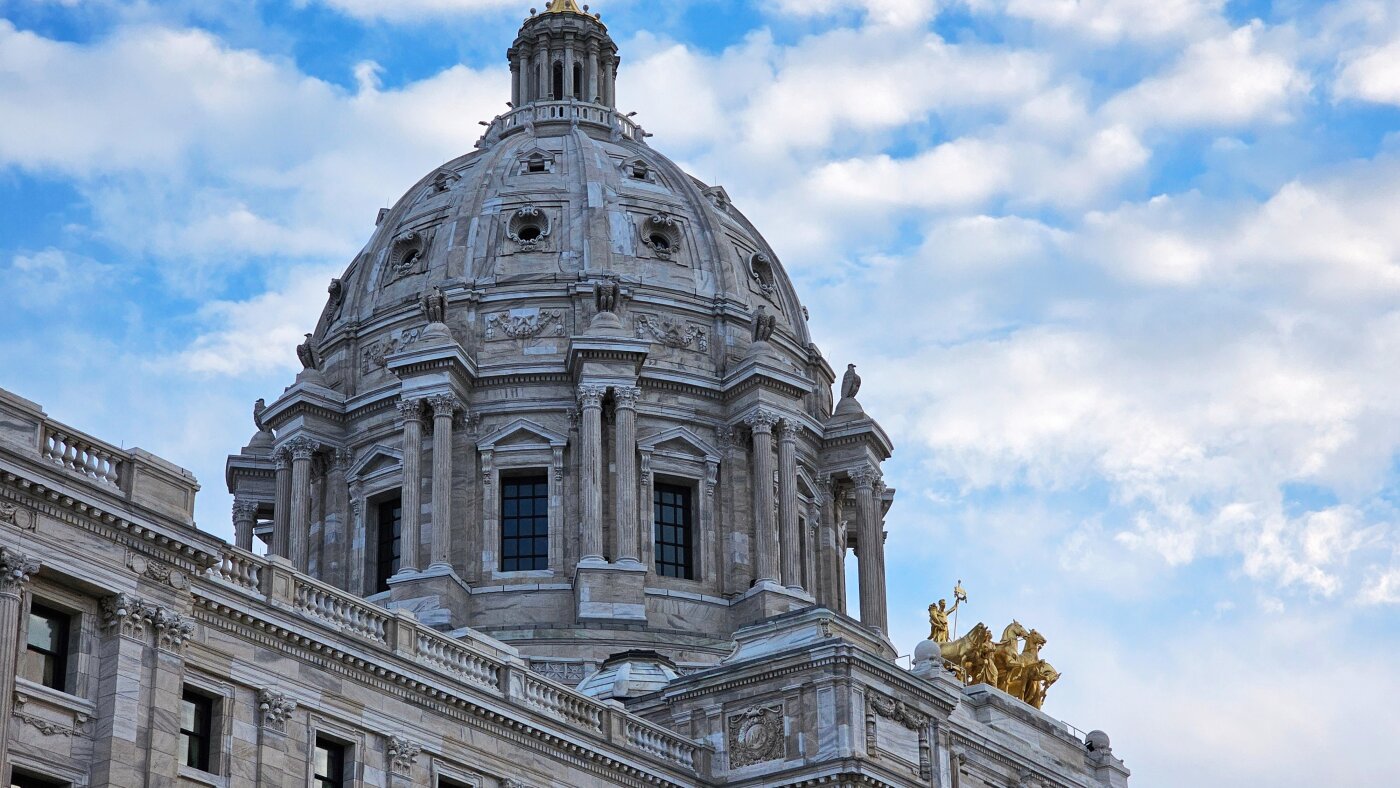
Join free today and unlock aggressive growth opportunities, expert stock analysis, real-time market alerts, and powerful investment insights designed to help investors pursue bigger returns with lower entry barriers. Minnesota has become the first U.S. state to pass a law making it a felony for prediction market platforms such as Kalshi and Polymarket to operate within its borders. The move marks an escalation in state-level regulatory action against the controversial industry, as dozens of other states have pursued legal challenges against similar platforms.
Live News
Minnesota Enacts First State Ban on Prediction Markets, Classifies Operations as Felony Investors often experiment with different analytical methods before finding the approach that suits them best. What works for one trader may not work for another, highlighting the importance of personalization in strategy design. Minnesota has taken the most aggressive stance among U.S. states against prediction markets, enacting legislation that classifies the operation of such platforms as a felony offense. The new law, which applies to companies like Kalshi and Polymarket, makes Minnesota the first state to criminalize the industry at this level. According to the legislation, any entity facilitating prediction markets—where users bet on the outcomes of future events such as elections, sports, or economic indicators—could face felony charges. The law specifically targets platforms that allow trading in contracts tied to political events, a segment that has drawn scrutiny from federal regulators, including the Commodity Futures Trading Commission (CFTC). The bill's passage follows years of federal and state debate over the legality and societal impact of prediction markets. Supporters of the ban argue that these platforms resemble unregulated gambling and may undermine election integrity. Critics contend that prediction markets provide valuable forecasting data and should be regulated rather than outlawed. Kalshi and Polymarket, two of the largest U.S.-facing prediction market platforms, have previously faced legal challenges from the CFTC over certain contract offerings. Kalshi, which operates under CFTC oversight for some contracts, has not publicly commented on the Minnesota law at this time. Polymarket, which primarily uses cryptocurrency-based transactions, has also faced regulatory pressure in multiple states.
Minnesota Enacts First State Ban on Prediction Markets, Classifies Operations as FelonyReal-time analytics can improve intraday trading performance, allowing traders to identify breakout points, trend reversals, and momentum shifts. Using live feeds in combination with historical context ensures that decisions are both informed and timely.Seasonal and cyclical patterns remain relevant for certain asset classes. Professionals factor in recurring trends, such as commodity harvest cycles or fiscal year reporting periods, to optimize entry points and mitigate timing risk.Cross-market monitoring allows investors to see potential ripple effects. Commodity price swings, for example, may influence industrial or energy equities.
Key Highlights
Minnesota Enacts First State Ban on Prediction Markets, Classifies Operations as Felony Real-time data can reveal early signals in volatile markets. Quick action may yield better outcomes, particularly for short-term positions. - First-of-its-kind felony classification: Minnesota’s law goes beyond previous state actions by making prediction market operation a felony, carrying potential prison time and fines. This sets a precedent that other states may consider. - Targeted platforms: The legislation explicitly targets well-known platforms like Kalshi and Polymarket, which have sought to expand their user base through event-based trading contracts. - Growing state-level opposition: Dozens of states have taken legal or regulatory action against prediction markets, but Minnesota is the first to impose criminal penalties. This could embolden other states to pursue similar legislation. - Potential market implications: The ban may reduce user access in Minnesota and could influence how prediction market platforms approach compliance, possibly leading to geographic restrictions or adjustments to contract offerings. - Federal regulatory uncertainty: The CFTC has already signaled skepticism toward some prediction market contracts, and Minnesota’s law adds a layer of state-level risk for operators, potentially complicating their business models.
Minnesota Enacts First State Ban on Prediction Markets, Classifies Operations as FelonyCross-asset analysis can guide hedging strategies. Understanding inter-market relationships mitigates risk exposure.Experts often combine real-time analytics with historical benchmarks. Comparing current price behavior to historical norms, adjusted for economic context, allows for a more nuanced interpretation of market conditions and enhances decision-making accuracy.Analyzing trading volume alongside price movements provides a deeper understanding of market behavior. High volume often validates trends, while low volume may signal weakness. Combining these insights helps traders distinguish between genuine shifts and temporary anomalies.
Expert Insights
Minnesota Enacts First State Ban on Prediction Markets, Classifies Operations as Felony While algorithms and AI tools are increasingly prevalent, human oversight remains essential. Automated models may fail to capture subtle nuances in sentiment, policy shifts, or unexpected events. Integrating data-driven insights with experienced judgment produces more reliable outcomes. From a professional perspective, Minnesota’s ban reflects an evolving regulatory landscape for prediction markets, which sit at the intersection of finance, gambling, and data forecasting. While the law targets platforms operating in the state, the broader industry may face increasing scrutiny from both state and federal authorities. Investors and operators in the prediction market space should monitor similar legislative efforts in other jurisdictions. The Minnesota law could serve as a template for other states seeking to restrict or criminalize such activities, potentially limiting the addressable market for platforms like Kalshi and Polymarket. However, the long-term impact on the sector may depend on federal rulings. The CFTC continues to evaluate whether certain prediction market contracts fall under its jurisdiction, and congressional action could preempt or override state-level bans. For now, companies in this space may need to evaluate their compliance strategies and consider the risks of operating in states with strict penalties. Market participants should note that the legal environment for prediction markets remains uncertain, and regulatory actions could shift rapidly. Any analysis of potential investment implications should account for these variables, as well as the possibility of broader industry consolidation or shifts toward offshore operations. Disclaimer: This analysis is for informational purposes only and does not constitute investment advice.